Sunday, June 28, 2026

M104 The Sombrero Galaxy

Not a very good rendition of M104 the Sombrero galaxy in Virgo but I'll post anyway.

36 minutes total time, taken unguided due to lack of guide stars available and after re-greasing the Titan mount and adjusting backlash. I had a short window of time for capture with a gap of sky between an oak tree due south and my house. Along with that, the galaxy was 32 deg. up right in the swamp of Philadelphia's light dome and it was still astronomical twilight (not that a non twilit sky would have been any better).

This was my first outing of 2026, delayed due to weather and family obligations.

M104 in Virgo

Type: Galaxy
Magnitude: 8
Spiral classification: SA(s)a
Apparent Size: 8' x 4'
Distance: 9.55 Mpc
Physical size: ~15 Kpc

Date acquired: June 5, 2026
Sky Brightness ~17.5 mag/arcsec^2
Ambient Temp: 77F / 25C
Camera: Starlight Xpress SX-694 (2x2 binning) 
Guider: Starlight Xpress Lodestar off-axis.
Scope: Astrotech AT10RC @F/8 (2000 mm)
Mount: Losmandy Titan w/Gemini-2
Filters: Astronomik L, R, G & B type 2c.
Exposures: L= 72 x 30 sec
Acquired, calibrated, stacked (Sigma) in Astroart 9

Processing Notes:
Calibrated with Flats, Bias & Defect Map
Compress Stars
Gradient removal
DDP
Denoise


Tuesday, September 30, 2025

NGC 7006

NGC 7006 in Delphinus is one of my favorite globular clusters. It's not as spectacular as M5, M3, M13, M22, at least from a visual sense, but understanding it's semi-remoteness compared to the others makes it special. I have a fond memory of my first glimpse of this cluster back in 1988 with my Celestron C8 SCT. With my '83 (second edition) copy of Peterson's Field Guide to the Stars (which I still have) and using the setting circles of the Super Polaris, I found the small smudge of light of the globular even through the light pollution dome of Philadelphia to the Southwest. Distance measurements to NGC 7006 since the field guide's printing have been refined with new estimates of 135,000 ly compared to 185,000 ly referenced in the book.

NGC 7006 in Delphinus
Type: Globular Cluster
Magnitude: 10.6
Apparent Size: 2.8'
Distance: 135 kly
Physical size: ~120 ly
Half-mass Rad. ~43 ly

Date acquired: Sept. 22, 2025
Sky Brightness ~17.95 mag/arcsec^2
Ambient Temp: 69F / 20.5C
Camera: Starlight Xpress SX-694 (2x2 binning) 
Guider: Starlight Xpress Lodestar off-axis.
Scope: Astrotech AT10RC @F/8 (2000 mm)
Mount: Losmandy Titan w/Gemini-2
Filters: Astronomik L, R, G & B type 2c.
Exposures: L= 27 x 120 sec
Acquired, calibrated, stacked (avg) in Astroart 9

Processing Notes:
Calibrated with Flats, Bias & Defect Map
Linear Gradient removal
Multiscale Denoise to remove some background LP noise
Log stretch

The annotated image labels some galaxies in the 16-18 mag. range.


Thursday, December 26, 2024

2018 images

In 2018 I bought my SX694 to give me a bit more F.O.V., slightly smaller pixels and higher Q.E. compared to my Starlight Xpress SXVF-H9. Some of the data I had acquired with the newer camera was never processed until recently. It's still a work in progress but I'll post some of the images here as I work through them.

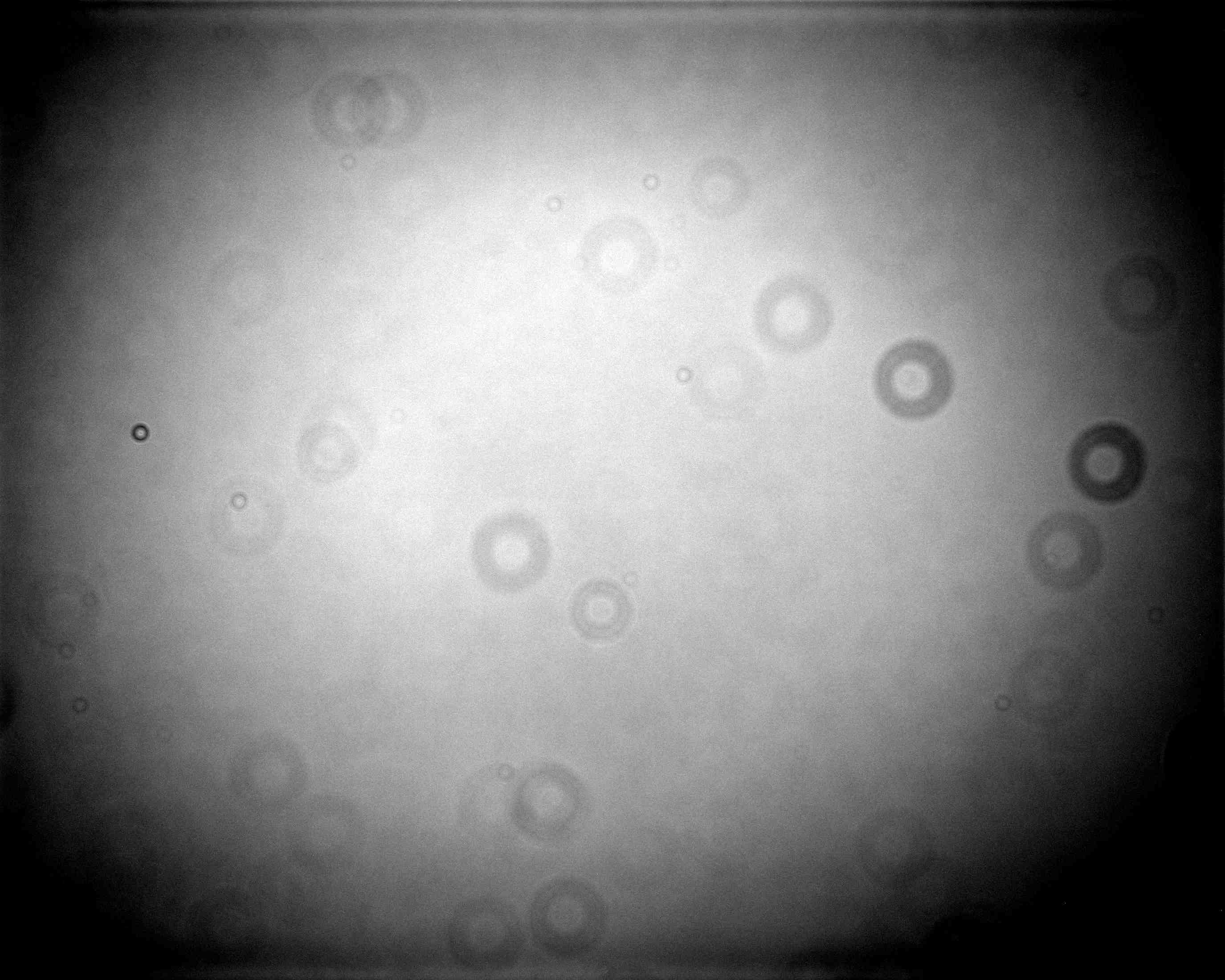
One of the issues I had using the newer camera was the presence of a circular gradient I could never correct with flat fields therefore not allowing me to fully stretch the data to my liking. This gradient was not apparent in my H9 images due to the smaller field with the AT10RC. Only a few years ago did I find, by chance, this issue was caused by the baffle tube being a bit too short allowing light from the telescope aperture to hit the inside of the baffle creating the rings. All my images from 2011 till mid-2022 with the AT10RC were taken without the baffle extension.

The extension was purchased from here. https://buckeyestargazer.net/Store/GSOBaffleEXT.php


Flat W/O Baffle


Flat W/Baffle


With some newer tools available in Astroart, I'm revisiting these older stacks to see what I can salvage for display.


Monday, November 11, 2024

Eris (2024)

Dwarf Planet Eris

Magnitude: 18.6 (est.)
Distance: ~94.6 AU 
Physical size: 2,377 km. (1,477 mi.)


Date acquired: October 7, 2024
Ambient Temp: 54F
Camera: Starlight Xpress SX-694 (2x2 binning) 
Guider: Starlight Xpress Lodestar off-axis.
Scope: Astrotech AT10RC @F/8 (2000 mm)
Mount: Losmandy Titan w/Gemini-2
Filters: Astronomik L type 2c.
Exposures: L= 22 x 180 seconds (66 minutes total)
Acquired, calibrated, stacked (Sum) in Astroart 9

Processing Notes:
Calibrated with Flats, Bias & Defect Map
Linear Gradient removal to correct for light pollution.

Eris was close to opposition during this session.
I last imaged Eris in 2012.

Palomar 5 (UGC 9792)

Palomar 5 in Serpens

Type: Globular Cluster
Magnitude: 11.8
Apparent Size: 8'
Distance: 75.6 kly
Physical size: ~152 ly


Date acquired: May 31, 2024
Sky Brightness ~18.25 mag/arcsec^2
Ambient Temp: 58F- 56F
Camera: Starlight Xpress SX-694 (2x2 binning) 
Guider: Starlight Xpress Lodestar off-axis.
Scope: Astrotech AT10RC @F/8 (2000 mm)
Mount: Losmandy Titan w/Gemini-2
Filters: Astronomik L type 2c.
Exposures: L= 13 x 120 seconds
Acquired, calibrated, stacked (Median) in Astroart 8

Processing Notes:
Calibrated with Flats, Bias & Defect Map
Linear Gradient removal to correct for light pollution.

Images were taken (mistakenly) without the cooler enabled so the subs were noisy. Bias, Flats and Darks were subsequently taken with the roughly the same temperature to salvage the data. The image is clipped considerably to mask the noise. Median stacking was used since a few satellite trails spoiled some images. There is also a noticeable elongation of the stars which may have been due to mis-collimation or poor polar alignment.

Thursday, July 4, 2024

NGC 5053

NGC 5053 in Coma Berenices

Type: Globular Cluster
Magnitude: 9.8
Apparent Size: 10.5'
Distance: 56.7 kly
Physical size: ~160 ly


Date acquired: May 31, 2024
Sky Brightness ~18.25 mag/arcsec^2
Ambient Temp: 64F - 59F
Camera: Starlight Xpress SX-694 (2x2 binning) 
Guider: Starlight Xpress Lodestar off-axis.
Scope: Astrotech AT10RC @F/8 (2000 mm)
Mount: Losmandy Titan w/Gemini-2
Filters: Astronomik L, R, G & B type 2c.
Exposures: L= 24 x 90 sec; R,G,B = 7 x 90 seconds each.
Acquired, calibrated, stacked (Median) LRGB combined in Astroart 8

Processing Notes:
Calibrated with Flats, Bias & Defect Map
Linear Gradient removal to correct for light pollution.
DDP stretch on Lum.
Noise Filter on RGB masters

Images were taken (mistakenly) without the cooler enabled so the subs were noisy. Bias, Flats and Darks were subsequently taken with the roughly the same temperature to salvage the data. The image is clipped considerably to mask the noise. Median stacking was used since a few satellite trails spoiled some images. Astronomical twilight did not end until halfway through the session.


Monday, April 8, 2024

April 8th 2024 Partial Solar Eclipse

Here is a quick post of .JPG images from my Canon T4i of the recent solar eclipse.

About 15 minutes after 1st contact the clouds quickly rolled in.